The success or failure of tilt-up projects depends on the quality of concrete used.
In tilt-up panel construction, concrete carries the structure, defines the external finish, and takes on environmental exposure from day one. If quality is controlled, panels lift cleanly, align properly, and perform as intended. If it is not, issues appear early, whether during lifting or shortly after installation
That’s why concrete quality is not just a material consideration; it is a decision that shapes the outcome of the entire build.
This article outlines why quality concrete matters in tilt-up construction and how it impacts each stage of the build.
The Role of Concrete in Tilt-Up Construction
In tilt-up panel construction, concrete performs two critical functions
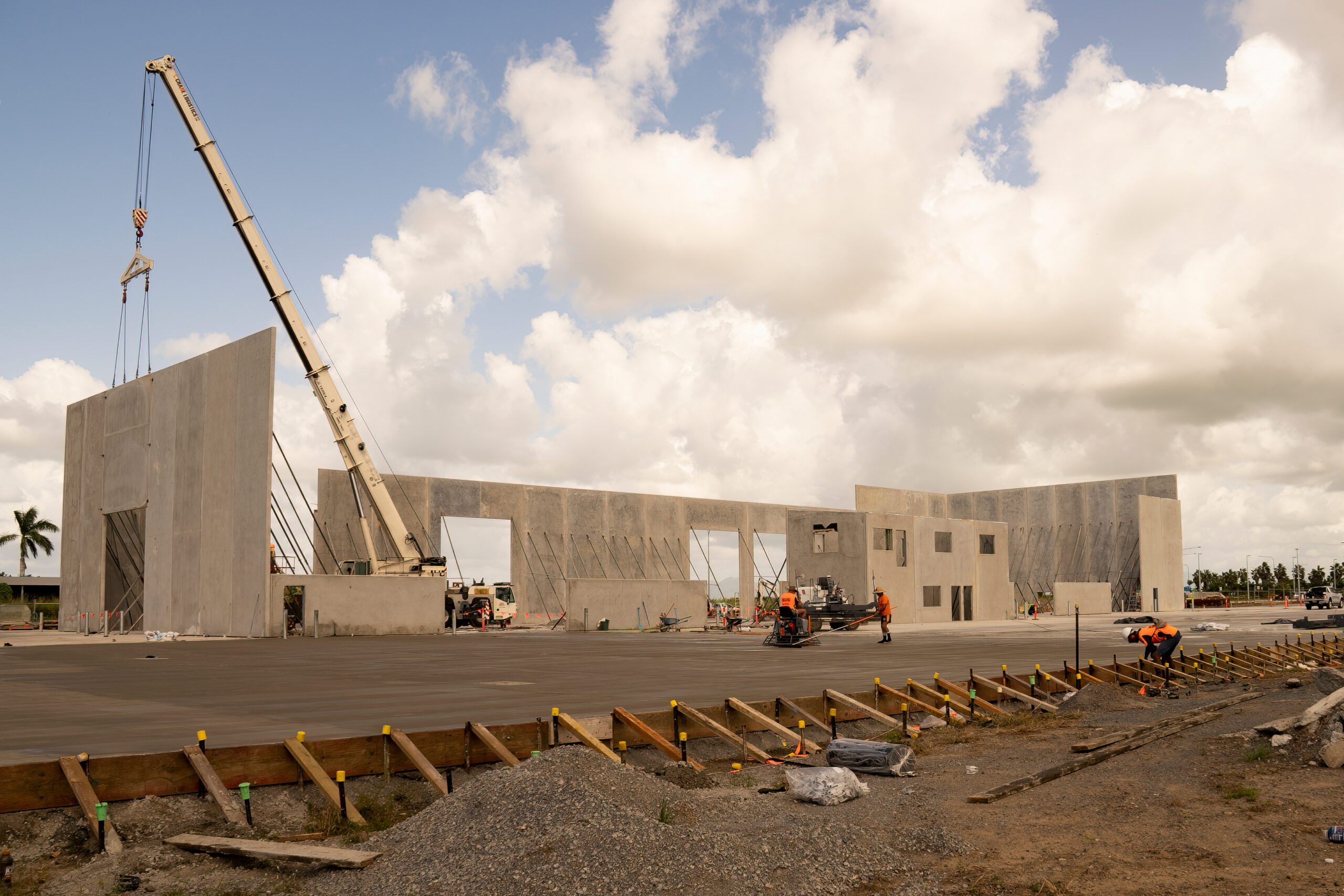
First, it is used to create concrete tilt-up panels that form the building’s exterior walls. These panels are cast horizontally on-site and then lifted into position using cranes.
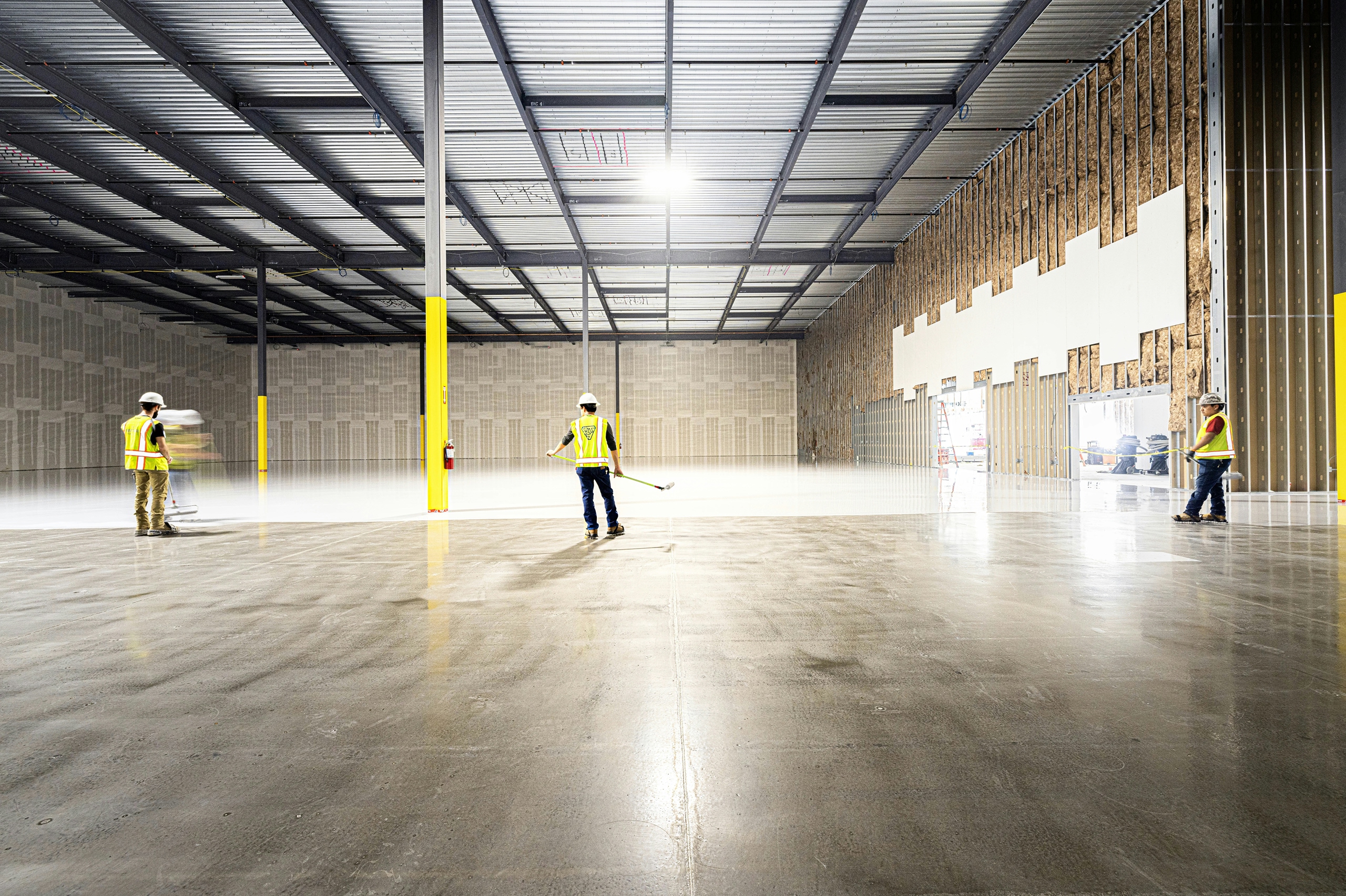
And second, it forms the base, typically a tilt-up concrete slab, where those panels are cast. This slab must be level, structurally sound, and capable of supporting both the casting process and the finished structure.
Because of this, concrete serves as the foundation of strong tilt-up construction – and it’s a principle that applies across all forms of industrial building construction.
There’s no grey area here. Every cubic metre of concrete that goes into a tilt-up project has a job to do, and it needs to be up to that job from the first pour.
What Defines Quality Concrete?
Quality concrete in tilt-up construction results from careful planning and control – and that process begins during the commercial building design phase, long before any concrete is poured.
It begins with the mix design. The ratio of water, cement, aggregates, and admixtures determines how the concrete performs during pouring, curing, and throughout its lifespan. Several factors define high-quality concrete:
- Water-to-cement ratio: Excess water weakens the mix, increasing the risk of surface cracking and long-term durability issues. A controlled ratio is non-negotiable.
- Compressive strength: Concrete tilt-up panels typically require a minimum of 25 to 32 MPa before lifting, as specified in the project’s lift plan. Reaching that threshold safely is critical.
- Workability: The mix needs to flow properly around reinforcing steel. Poor workability leads to voids and honeycombing, compromising structural performance.
- Admixtures: Plasticisers, retarders, and other admixtures are used to fine-tune the mix for local conditions. In Perth’s hot summers, retarders prevent premature setting during the pour, something that’s essential, not optional.
- Consistency across pours: Large tilt-up projects involve multiple pours. Inconsistent batching leads to colour variation between panels and uneven structural performance, both of which create problems down the line.
Getting this mix right requires experience with local suppliers, climate conditions, and the specific design requirements of each project. It’s not something you figure out on the job.
Types of Concrete Used in Tilt-Up Projects
Different stages of tilt-up panel construction require different types of concrete. Selecting the right mix for each stage is essential.
- High-strength structural concrete: Used for load-bearing tilt-up concrete panels, this mix is designed to achieve high compressive strength, enabling panels to be lifted safely.
- Slab concrete for casting beds: The tilt-up concrete slab must be smooth and level. It acts as the casting surface and supports the panels during construction.
- Architectural concrete mixes: For projects where appearance matters, specialised mixes are used to achieve consistent colour and surface finish.
- Controlled-cure or fast-setting mixes: In time-sensitive builds or challenging weather conditions, such as those common in tilt panel construction Perth, mixes can be adjusted to control curing time.
Each type of concrete serves a specific purpose. Using the wrong mix can impact both structural performance and visual quality.
Benefits of Using Quality Concrete in Tilt-Up Projects
Cutting corners on concrete might save a few dollars upfront, but in tilt-up panel construction, the downstream cost of poor material choices can be significant. Here’s what quality concrete actually delivers:
Structural Integrity
High-quality concrete ensures that every tilt-up concrete panel performs as expected.
Panels must withstand lifting, positioning, and long-term loads. Poor-quality concrete increases the risk of cracking, failure, and safety concerns. Strong and well-cured concrete provides reliability and confidence in the structure.
Durability and Finish Quality
Tilt-up buildings are designed for long-term use, especially in industrial and commercial settings.
Quality concrete improves resistance to environmental exposure and reduces the likelihood of surface defects. It also ensures a consistent and professional finish across all panels.
Poor-quality concrete, on the other hand, can lead to visible defects, uneven colour, and higher maintenance requirements over time.
Cost Efficiency Over Time
Lower-quality concrete may reduce upfront costs, but it often leads to higher expenses later.
Issues such as panel defects, failed lifts, and repairs can delay the project and increase overall costs. Maintenance requirements also tend to be higher over the building’s life.
Investing in quality concrete from the beginning helps avoid rework, keeps the project on schedule, and delivers better long-term value.
Conclusion: Build It Right From the Ground Up
In tilt panel construction, there’s no shortcut that doesn’t eventually show up in the building. The quality of your concrete, how it’s specified, mixed, poured, and cured, determines whether your facility stands strong for decades or creates headaches from day one.
At Built Ink, we’ve completed hundreds of commercial and industrial builds across Perth and regional WA. Our approach to tilt-up concrete panel construction is built on established supplier relationships, rigorous on-site monitoring, and deep knowledge of how to deliver quality results in WA’s demanding climate.
If you’re planning an industrial or commercial facility and want to understand what a properly executed tilt-up project looks like from the ground up, talk to our team. We’ll walk you through the process, the material choices, and what to expect at every stage.
Contact Built Ink today to discuss your next project and get it right from the first pour.